
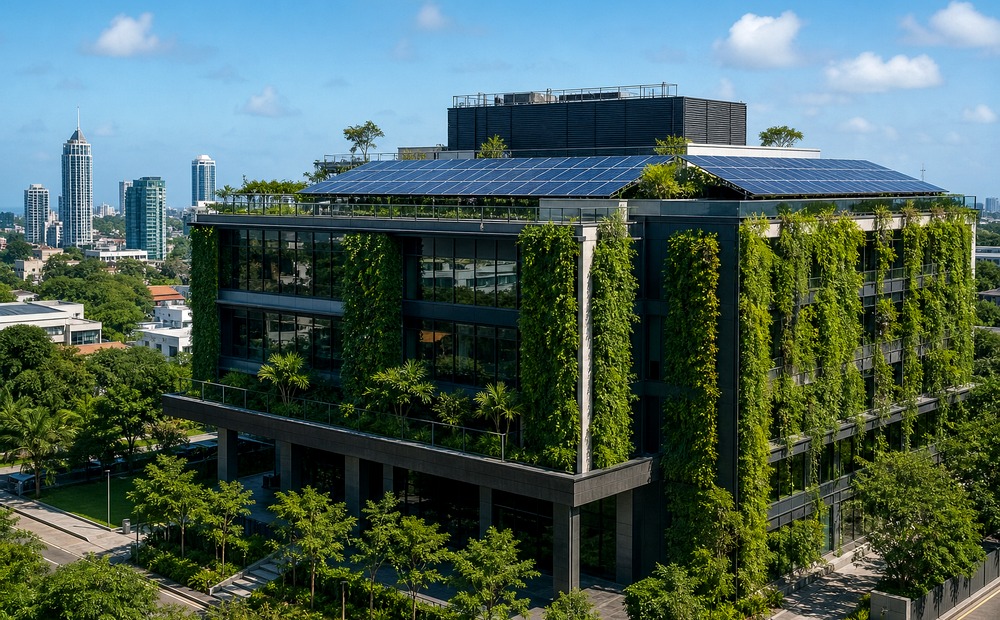
Environmental, social, and governance considerations have moved from voluntary reporting to core drivers of real estate value in Sri Lanka. Institutional tenants, REIT investors, and regulators increasingly expect transparency on energy performance, resilience, and community impact. Developers and asset owners who treat ESG as a compliance checkbox risk obsolescence; those who integrate sustainability into design, operations, and financing strategy strengthen lettability and exit optionality.
Sri Lanka's green building certification certification framework provides a recognised benchmark for building environmental performance. New developments and major retrofits pursue ratings that signal efficiency to tenants and investors. Beyond certification labels, operational outcomes — measured energy use intensity, water consumption, waste diversion rates — determine whether sustainability investments translate into lower operating costs and higher occupancy.
Climate resilience is particularly salient for coastal and low-lying districts. Flood risk assessment, drainage infrastructure, and mechanical plant protection are engineering concerns with financial consequences. Insurance underwriters and institutional buyers increasingly question resilience planning during due diligence. Assets without credible adaptation strategies may face higher insurance premiums or valuation discounts over time.
Social impact dimensions include accessibility, indoor environmental quality, and contribution to the surrounding urban fabric. Developments that integrate public realm improvements, active mobility connections, and inclusive design support planning approvals and community acceptance. For corporate occupiers, wellness-oriented features influence talent attraction in competitive labour markets.
Governance practices underpin trustworthy ESG reporting. Data collection protocols, third-party assurance, and alignment with frameworks such as GRI or SASB improve credibility with global capital providers. Sri Lanka-listed vehicles and multinational tenants often require ESG metrics in vendor questionnaires; asset managers must maintain audit-ready documentation.
Financing markets reward credible sustainability performance. Green loans and sustainability-linked facilities may offer margin benefits tied to verified targets. Even when explicit pricing advantages are modest, access to a broader lender pool supports refinancing flexibility. Investors should model not only capex for upgrades but also potential financing benefits over the hold period.
Retrofit economics deserve rigorous analysis. Not every building justifies immediate deep retrofit; prioritisation should target measures with clear payback — lighting, cooling optimisation, building management systems — before more capital-intensive envelope works. Phased programmes aligned with lease events and capex budgets reduce disruption while progressing toward portfolio targets.
Policy direction in Sri Lanka continues to emphasise energy efficiency and low-carbon transition. Real estate leaders should monitor regulatory consultations affecting new builds, existing stock reporting, and potentially expanded disclosure requirements. Early movers who build internal capability will adapt more smoothly than those reacting under deadline pressure.
GAR Sri Lanka incorporates ESG due diligence and asset optimisation thinking across advisory mandates, helping clients align sustainability goals with leasing, development, and investment decisions. Speak with our team about ESG benchmarking for your Sri Lankan assets or upcoming projects.
Tenant engagement programmes translate sustainability investments into behaviour change — waste segregation, after-hours shutdown protocols, and green lease clauses aligning incentives between landlord and occupier. Without behavioural follow-through, technical upgrades underdeliver on projected savings.
Biodiversity and urban greening initiatives gain prominence in larger developments. Landscaping that supports heat mitigation and stormwater management can assist planning outcomes while improving placemaking. These features increasingly appear in corporate occupier scorecards when selecting long-term headquarters.
Transition planning for stricter efficiency standards should be budgeted in medium-term capex plans. Owners who defer action may face concentrated retrofit costs later. Scenario analysis helps boards allocate reserves without impairing distributions unexpectedly.
Stakeholder assurance increasingly expects third-party review of sustainability claims. Investors and tenants may request independent verification of consumption data and certification status. Building credible measurement infrastructure early reduces reputational risk and supports green financing conversations.
Material selection and embodied carbon are gaining attention in development briefs. While operational efficiency dominated earlier ESG cycles, design teams now document sourcing decisions for major structural and façade elements. Developers who articulate lifecycle thinking may differentiate projects with institutional capital focused on long hold periods.
Water stewardship and waste reduction targets are appearing alongside energy goals in tenant RFPs. Buildings with credible recycling infrastructure and water-efficient plant may command occupancy advantages even when base rents align with peers lacking comparable credentials.
Climate scenario analysis — stress-testing assets against heat and rainfall extremes — is moving from specialist consultancy to standard board reporting. Owners who document adaptation investments may negotiate insurance terms more favourably than peers relying on historical loss experience alone.
In Sri Lanka, sustainability is becoming a rent and liquidity variable — not a marketing footnote on a brochure.
— GAR Sri Lanka